New Boston Historical Society
New Boston, New Hampshire
244ClarkHillRd-1
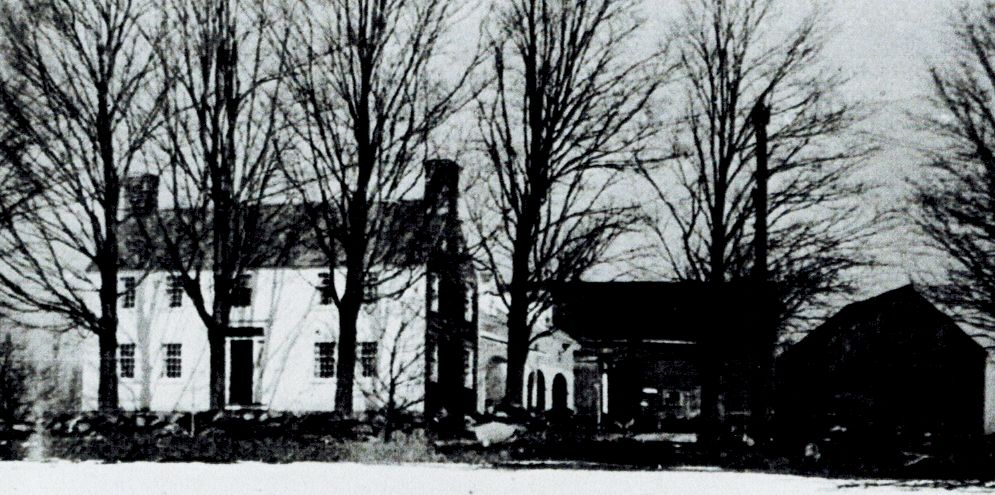
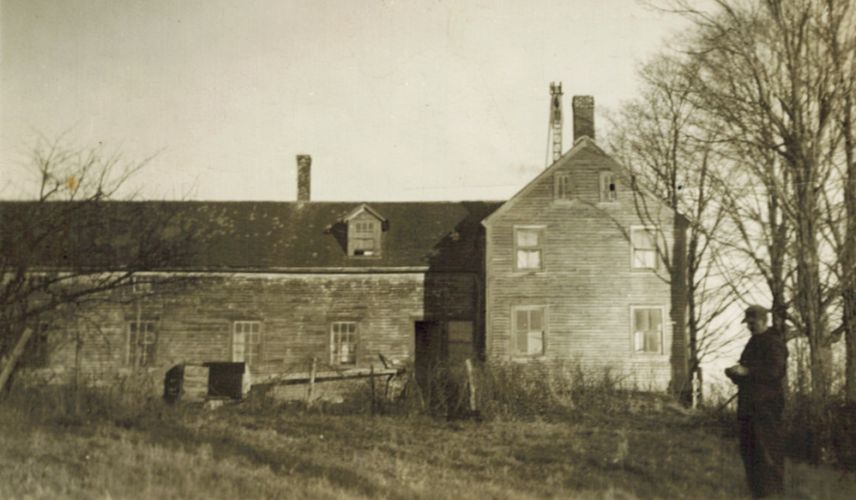
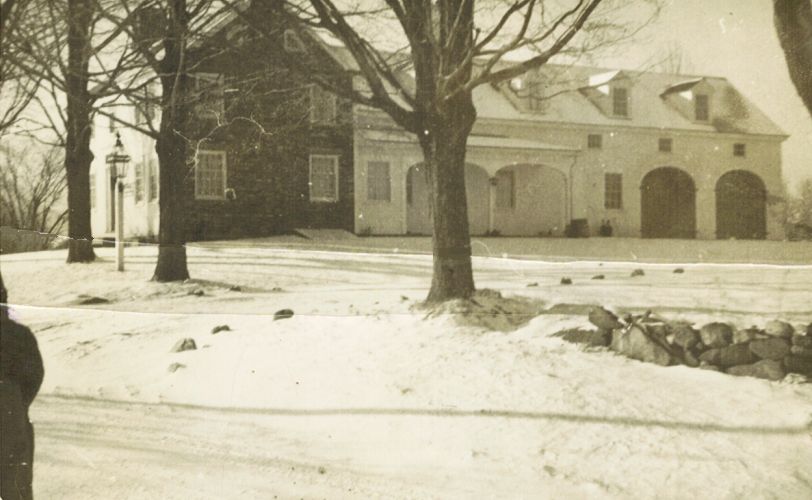
The house prior to its renovation in 1941

Behind the Door: 244 Clark Hill Road
by Mary Atai
(December 2025)

The unique home at 244 Clark Hill Road was built around 1880, according to the tax records. However, there is evidence from an original smaller footprint that there was a center-chimney cape here from about 1740. The home most likely was just expanded in 1880. One clue is that part of the house has gunstock corners, which were popular in the 1700s, but out of style and no longer used by the early to mid 1800s.

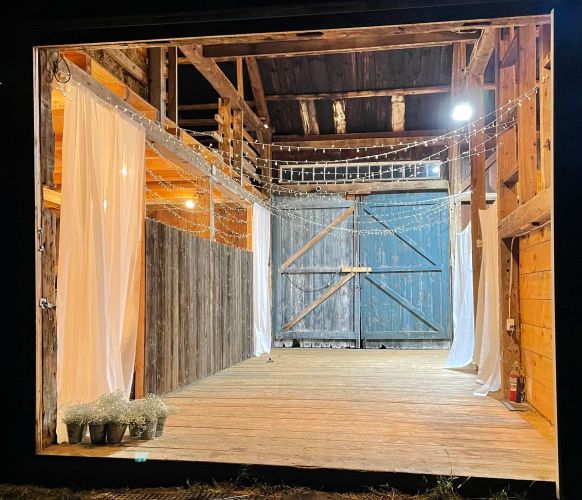
There is a large barn on the property, now consisting of two partial barns put together. One side is built with gunstock post and beam corners and is in the style of a 1700s Sussex barn, with double height walls, exposed beams, and expansive space. The other half was originally a dairy barn, which was moved there and joined to the Sussex barn, creating one 2-story barn, 30 feet by 56 feet. The original barn structure would have belonged with the remaining footprint of the earlier smaller home.

There is a possibility that this original home and barn could have belonged to Matthew Thornton. It is believed that Matthew may have lived for eight years in New Boston, establishing a farm in 1762, before returning to Londonderry. There is no record of exactly where he lived here. However, this property borders with Thornton Road, most likely named after Matthew. Having been a lawyer, judge, politician, and surgeon during his lifetime, Thornton was one of the three signers of the Declaration of Independence from New Hampshire.

By the mid-1800s, William E. Andrews owned this property, consisting of 100 acres. He was a son of Deacon Issachar Andrews, of some note at that time. He must have been the one responsible for expanding the house (in 1880).

William's widow, Lydia, owned the property until she died in 1905, at which time it was bought by Ernest A. Bartlett. In 1924, it passed to Fred and Emma O'Neil, who sold the property to William and Evelyn McGill in 1941.
244ClarkHillRd-3
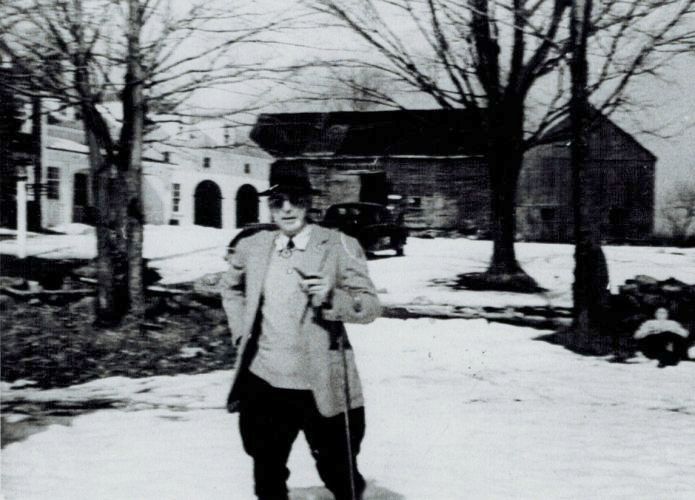
William McGill

Mr. McGill was a businessman from Beacon Hill in Boston. He began to repair and remodel the house to be used as a summer home. The McGills named the property Ridgholm Farm. They added the brick ends to the building and installed paneling that came from Beacon Hill. They also added a large lantern and post in the front of the house, made by the same artisan who made the lanterns lighting the streets of Boston. All the remodeling was done by Artemus Boulter and Sons, the premier construction company of the time. The house became very upscale for those days in New Boston.

244ClarkHillRd-4
The house after it was restored by the McGills

In a letter on file at the Historical Society, one of the neighbors, Mrs. Lou Berry, mentioned to a relative how impressed she was with the "arched doorways on the garage at the end of the shed" and by all the work in general. In another letter, dated July 6, 1942, Mrs. Berry stated "Mr. McGill passed away last week-suddenly. Too bad when they'd just fixed up that place so beautifully. Wish I were affluent enough to take it over if they don't keep it."

However, this was not to be, because Mrs. McGill did keep it for another 17 years after her husband's passing, although she never lived there year-round. She increased the property from 68 acres to 89 acres, before selling in 1959.
244ClarkHillRd-2

By the 1970s, Ray Wheeler, an industrial engineer who had worked for IBM, GE, and Honeywell, and his wife, Grace, a self- employed graphic designer, chose New Boston for their new home. They had searched for just the right topography because their future intention was to build an underground house. At this time, there was a lot of turbulence in the Middle East. Heating oil was becoming increasingly expensive. Underground houses, which were inexpensive to heat, were becoming an interesting alternative. The Wheelers became owners of 244 Clark Hill and lived there, using it as their base, while building their in-ground house on the other side of the road and then moving there.

Vera and John Magruder later bought the property, which was 14 acres by this time, restoring and upgrading the 12-room house, while maintaining the historical features, like horsehair plaster, beams, and wide plank floors. They had the barn restored by Bill Marko of Henniker, N.H., replacing three walls of siding, floorboards, and stairs, and adding a metal roof and a workshop.
244ClarkHillRd-5

244ClarkHillRd-6
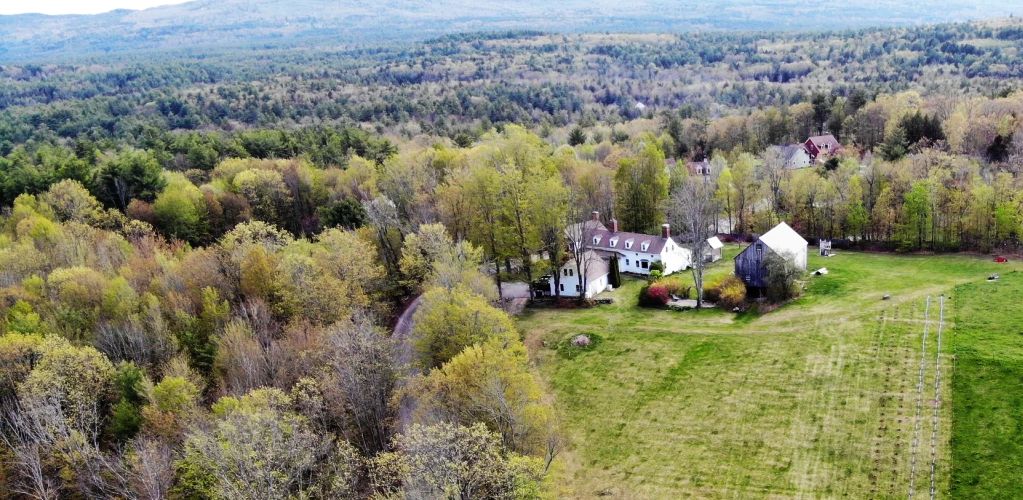
House, vineyard, and barn photos from the Vingård Winery website

The current owners, Nick and Marie Hayden, purchased the property in 2019, having lived nearby previously. They named it Valhalla Farms, in honor of Marie's Viking heritage. They have also completed major work on the home, including a new roof and the addition of solar panels, becoming nearly energy self-sufficient. As vintners, they planted grapes on the long slope beside the house in 2020 and more vines were added in 2021, with plans for future expansion.

They opened Vingård Winery in 2023. Currently available are Idunn's Select Chardonnay, named after the Norse goddess of spring and youth, and Bragi's Blueberry wine.


Click here to return to the main page for "Behind the Door" articles.